
Macro-Economy · Tamil Nadu
Why Tamil Nadu's exports held firm while national growth slipped in Q3
A granular look at export performance data from DGCI&S and the state's own industrial output records across July–September 2023.
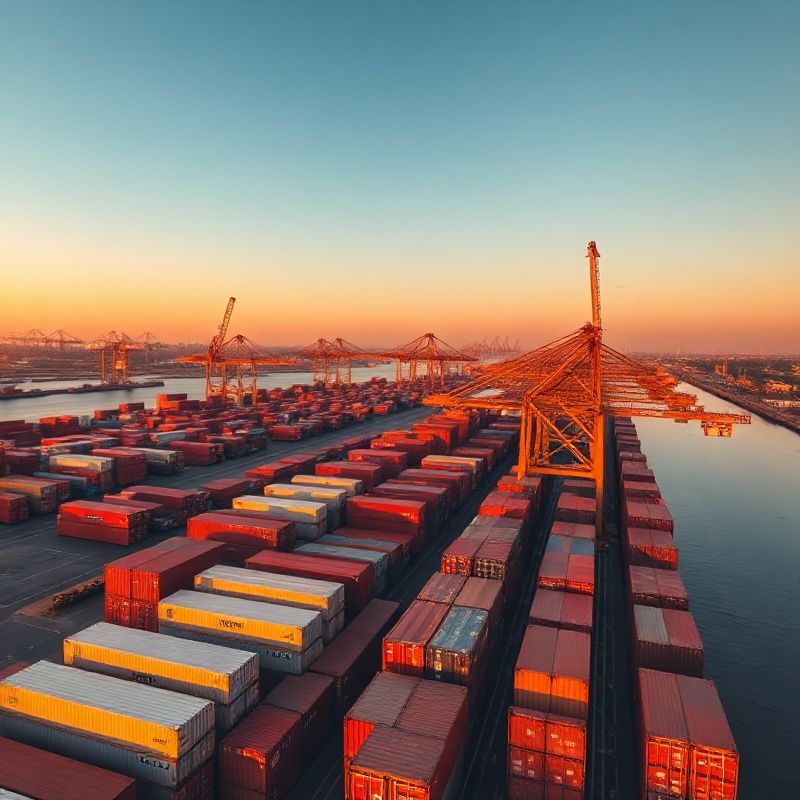
India's Q3 FY2024 GDP growth came in at 6.0 percent — a visible step down from the 7.8 percent recorded in Q1. Yet Tamil Nadu's Directorate of Economics and Statistics data for the same period showed merchandise exports from the state rising 4.2 percent quarter-on-quarter, with automotive components and garments leading the increase. This divergence is not accidental. Three structural factors made Tamil Nadu's export base more resilient than the national picture suggests.
First, the Sriperumbudur-Oragadam manufacturing corridor — anchored by Hyundai, Saint-Gobain, and a dense network of Tier-2 suppliers — had already absorbed the post-pandemic input-cost shock by mid-2023, having completed a two-year re-tooling of procurement contracts that shifted a portion of raw-material sourcing from China to domestic suppliers in Gujarat and Maharashtra. That re-tooling reduced unit production costs by an estimated 6–9 percent, according to CII Tamil Nadu chapter briefings reviewed by Ekonomikons. Second, Chennai Port's turnaround time — a persistent bottleneck through 2021–22 — improved to an average of 3.1 days in Q3 FY2024, down from 4.7 days a year earlier, following the commissioning of a second automated container terminal. Faster clearance directly translates to lower working-capital costs for exporters, which showed up in their order-book confidence. Third, garment exporters in the Tirupur cluster benefited from a specific EU demand shift: buyers front-loaded orders ahead of the Carbon Border Adjustment Mechanism's transitional phase, which begins formal reporting obligations in January 2024. Tirupur's knitwear shipments to Germany and the Netherlands rose 11 percent year-on-year in the quarter.
None of these factors appear in national-level GDP commentary. The aggregate growth slowdown was real — driven by weaker consumption in northern and central states and a pause in government capital expenditure. But Tamil Nadu's export story within that slowdown illustrates how sub-national economic dynamics can run independently of the headline number. Readers and analysts who rely only on national data risk missing the most actionable signals.